EYES ARE ON YOU,
DEAR OYNON.
... AND YOUR ABNORMAL
SELF.
DOSSIERㅤㅤBOUNDSㅤㅤJOURNALㅤㅤLETTERS
MENKHU DOSSIER
✧ㅤSTRENGTHㅤㅤㅤㅤㅤ6✧ㅤPERCEPTIONㅤㅤㅤㅤ8✦ㅤENDURANCEㅤㅤㅤㅤ9✧ㅤCHARISMAㅤㅤㅤㅤㅤ5✧ㅤINTELLIGENT ㅤ ㅤ ㅤ 8✧ㅤAGILITYㅤㅤㅤㅤ ㅤㅤ 7✧ㅤLUCKㅤㅤㅤ ㅤㅤ ㅤㅤ 7
✧ㅤHEALTHㅤㅤㅤㅤㅤㅤ96✧ㅤIMMUNITYㅤㅤㅤㅤㅤ82✧ㅤINFECTION ㅤ ㅤㅤ ㅤ37✧ㅤREPUTATION ㅤ ㅤ ㅤ91
✧ㅤPHARMACOLOGY✧ㅤHERBALISM✧ㅤMENKHU KNOWLEDGE✧ㅤHARUSPICY
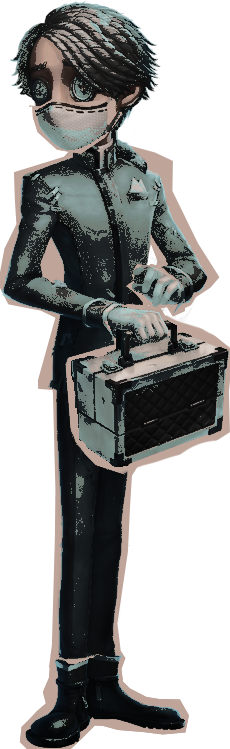
ㅤNAMEㅤㅤARKADI YEFIMOVICH OBRAZTSOV
ㅤ ㅤㅤㅤㅤㅤ АРКАДИЙ ЕФИМОВИЧ ОБРАЗЦОВㅤMONIKERㅤㅤTHE HARUSPEX
ㅤㅤㅤㅤㅤㅤㅤ ㅤ THE RIPPER
ㅤㅤ ㅤㅤㅤㅤㅤㅤ THE MENKHUㅤAGEㅤㅤ28ㅤBIRTHDAYㅤㅤDECEMBER 10ㅤGENDERㅤㅤMALEㅤORIENTATIONㅤㅤUNKNOWNㅤNATIONALITYㅤㅤRUSSIANㅤSPECIESㅤㅤHUMANㅤSTATUSㅤㅤALIVEㅤHANDINESSㅤㅤAMBIDEXTROUSㅤHEIGHTㅤㅤ6'3 | 195ㅤHEIGHTㅤㅤ180 LBS | MESOMORPHㅤEYE COLOURㅤㅤCOIN GREYㅤHAIR COLOURㅤㅤCLOUD GREYㅤOCCUPATIONㅤㅤSURGEON
ㅤ ㅤ ㅤㅤㅤㅤㅤㅤㅤㅤHARUSPEX
ㅤVOICE CLAIMㅤㅤVSEVOLOD KUZNETSOV
ㅤTHE WEIGHT OF BLOODㅤ
The ㅤOBRAZTSOVㅤ family had never been like other healers. While modern doctors relied on sterile instruments and laboratory tests, the ㅤOBRAZTSOVㅤ cut open the flesh, examining the organs, studying the blood as it pooled and congealed. They practiced haruspicy, an ancient art of divination through the entrails of the dead, and somehow, impossibly, it worked. Where antibiotics failed, their panaceas succeeded. Where rare diseases baffled specialists, the ㅤOBRAZTSOVㅤ found answers written in kidneys and the dark chambers of the heart. The medical establishment dismissed them as charlatans, but the desperate always found their way to the steppe, and the desperate always left healed. It was said that the family had adapted the old Etruscan teachings to something uniquely their own — a practice that straddled the line between medicine and something far older, far stranger. And for as long as anyone could remember, the fate of each ㅤOBRAZTSOVㅤ child had been sealed before they took their first breath, bound to continue the legacy until the end of time itself.
ㅤARKADI YEFIMOVICH OBRAZTSOVㅤ was born on December 10 in Astrakhan, Astrakhan Oblast, Russia, to a pair of healers. His father, ㅤYEFIMㅤ, was a haruspex, a reader of organs, a diviner of futures written inside a human's body. His mother, ㅤVERAㅤ, was a phlebotomist who had abandoned modern medicine to study the ancient art of bloodletting as practiced by the steppe people for centuries. Their union had been passionate but contentious, and when ㅤVERAㅤ gave birth to a healthy, squalling boy with his father's blue eyes and his mother's stubborn chin, the argument that had simmered beneath their marriage finally erupted. ㅤYEFIMㅤ insisted the boy would follow him — would learn to read the future in the livers of the dead, would become the next great ㅤOBRAZTSOVㅤ haruspex. ㅤVERAㅤ countered that ㅤARKADIㅤ would study blood, would learn the secrets that flowed through every vein, would become a phlebotomist whose skill would surpass even her own. They argued for hours, for days, for weeks, each convinced their path was the right one. In the end, neither won. ㅤARKADIㅤ would eventually learn both.
ㅤA CHILD OF TWO PATHSㅤ
ㅤDEATH'S BEST FRIENDㅤ
Growing up in the ㅤOBRAZTSOVㅤ household meant growing up surrounded by death. This was intimate death, hands-on death, death that taught you something if you were patient enough to listen. Little ㅤARKADIㅤ learned to walk in rooms that smelled of blood and rotting flesh, of dirt and incense and the sharp tang of herbs. He played at his mother's feet while she drained blood from patients who swore the practice saved their lives. He sat on his father's workbench while ㅤYEFIMㅤ cut open the recently deceased, examining their organs for signs of disease, for messages from the spirits, for the secrets that only the dead could tell. Other children would have screamed and fainted at the gore that was simply a Tuesday afternoon in the ㅤOBRAZTSOVㅤ home. ㅤARKADIㅤ never flinched. He watched with wide, curious eyes as his father's blade parted flesh, as his mother's needles found veins. He loved to see them work — loved the precision, the reverence, the way his parents treated every body as though it held answers worth finding. "We are the blood and organ," his father would tell him, lifting him onto his lap after a long day's work. "That is what makes us haruspex. We do not fear what others fear. We see what others cannot."
ㅤTHE PLAGUE YEARSㅤ
When the plague came to the steppe, it came without warning and without mercy. The disease was unlike anything the modern world had seen: a hemorrhagic fever that turned the blood to sludge, that rotted organs from the inside out, that left its victims bleeding from every orifice before death finally claimed them. There was no cure, no vaccine, no hope. The ㅤOBRAZTSOVㅤ did what they always did: they adapted. ㅤYEFIMㅤ cut open the dead, searching their ruined organs for patterns, for clues, for anything that might lead to a treatment. ㅤVERAㅤ drew blood from the living, studying it under her microscope, comparing samples, trying to understand what made the plague so lethal. ㅤARKADIㅤ, now old enough to understand the gravity of the situation, never left his father's side. Even when ㅤVERAㅤ fell ill — her blood turning dark, her organs failing — ㅤARKADIㅤ refused to stay home. He followed ㅤYEFIMㅤ into the plague wards, into the houses of the dying, into the very heart of the outbreak. "Stay home," ㅤYEFIMㅤ begged him, his voice cracking with fear. "The last thing I want is to see my successor die of this plague." But ㅤARKADIㅤ shook his head and picked up his father's tools. He learned to cut, to examine, to read the signs written in ruined flesh. He learned to see the plague as a puzzle, one that could be solved if they were clever enough, brave enough, stubborn enough to keep trying.
ㅤTHE ART OF READING DEATHㅤ
The plague years were devastating, but they were also formative. ㅤARKADIㅤ learned everything his father knew and then some. He learned to cut open the dead with steady hands, to examine their infectious organs without fear, to read the blood and bile and shit for signs of what was to come. He learned that the steppe spoke through its dead — that every body carried a message, if you knew how to listen. ㅤYEFIMㅤ taught him the old ways, the haruspicy that had been passed down through generations of ㅤOBRAZTSOVㅤ. "The liver is the seat of life," ㅤYEFIMㅤ would say, his blade hovering over the organ in question. "Read it carefully. It will tell you if this person was meant to die, or if the plague stole them before their time." ㅤARKADIㅤ learned to distinguish between the two — between deaths that were natural and deaths that demanded answers. He learned to search for the vaccine, working alongside his father in their makeshift laboratory, testing herbs and tinctures and blood samples. They never found a cure — not during that first outbreak — but they found something almost as valuable: a treatment that slowed the spread, that bought the living enough time to fight. It wasn't perfect, but it was something. It was hope.
Years after the plague ended and ㅤVERAㅤ finally succumbed to her illness, ㅤARKADIㅤ left the steppe for the first time in his life. He was a young man now, tall and serious, with his father's steady hands and his mother's fierce intelligence. He traveled to the city to study herbalism to help his father perfect the cure. If the plague ever returned, they would be ready. It was in the city that he met someone who intrigued him in ways he couldn't explain. They were a modern doctor: a person of science, of sterile instruments and evidence-based medicine, someone everyone respected and admired. They were everything ㅤARKADIㅤ was not: polished, professional, dismissive of the old ways he held so dear. And yet, there was something about them that drew him in. They were so different, so utterly unlike anyone he had ever met, and ㅤARKADIㅤ found himself wanting to know everything about them: their thoughts, their beliefs, their stubborn refusal to accept anything they couldn't prove. They argued constantly, of course. They called his methods barbaric; he called theirs soulless. But beneath the arguments was something else; something that made his heart race and his mind spin. It was a love story, though neither of them would have called it that.
ㅤTHE DOCTOR AND THE DIVINERㅤ
ㅤTHE CALL OF THE STEPPEㅤ
His studies and his complicated feelings for the doctor consumed years of his life, and for a while, ㅤARKADIㅤ almost forgot that he was an ㅤOBRAZTSOVㅤ — almost forgot the duty that awaited him on the steppe. Then the news came, and everything stopped. His father was dead. The circumstances were mysterious. ㅤYEFIMㅤ had been found in his workshop, his body cold and still, with no obvious cause of death. No wounds, no signs of illness, no explanation. Nobody knew who killed him or what killed him, because not many people on the steppe were knowledgeable enough to examine the body. Those who had been there when his body was discovered spoke of a strange sensation: a feeling of suffocation, of wrongness, as though the very air around the workshop had turned toxic. The place where ㅤYEFIMㅤ died was deadly, they said. Deadly and unexplainable. And as if that weren't enough, the steppe was showing signs of the old plague returning. ㅤARKADIㅤ had to go back. He had no choice.
ㅤTHE INHERITANCEㅤ
With their respected doctor dead, everyone on the steppe would depend on ㅤARKADIㅤ to continue the legacy. He was the only child of ㅤYEFIMㅤ and ㅤVERAㅤ — or rather, he was the only biological child. ㅤYEFIMㅤ had taken in dozens of orphans over the years, children who had lost their families to the plague, children who had been raised in the ㅤOBRAZTSOVㅤ home and had come to see ㅤYEFIMㅤ as a father figure. They were his responsibility now. They needed him to claim his father's inheritance: the responsibility to cure the plague, to keep everyone alive, to do what ㅤYEFIMㅤ had done for so many years. It was a big burden — perhaps too big for one man — but ㅤARKADIㅤ had never been given a choice. His fate had been sealed before he was born. What he didn't know was that the doctor he found so interesting was already on her way to the steppe. Someone had told them what had happened — someone who knew about their they would want to know. They were coming to see him, to help him, to prove that even ancient traditions and modern medicine could find common ground. When they arrived, ㅤARKADIㅤ would have no time to be surprised. The plague was spreading, his father's killer was still at large, and the steppe was suffocating under the weight of a mystery that no one else could solve. Together, they would have to work. A haruspex and a doctor, ancient and modern, blood and organ and science and soul. Together, they would have to fight.
